


Understanding Energy Efficient Windows in Los Angeles: Ratings, Glass, and Frames
For Southern California homes, choosing energy efficient windows in Los Angeles requires dual-pane, low-E glass packages with a U-Factor of 0.30 or lower and a Solar Heat Gain Coefficient (SHGC) of 0.25 or lower. These key performance metrics ensure compliance with California Title 24 Building Energy Efficiency Standards and qualify retrofits for local utility rebates. Exploring the benefits of energy efficient windows in California’s climate reveals that upgrading your building envelope is one of the most effective ways to block solar radiation and lower high cooling costs during peak summer heat waves.
Key Efficiency Metrics: U-Factor and SHGC for SoCal Climates
To make an informed purchase, start by understanding window energy ratings certified by the National Fenestration Rating Council (NFRC). The NFRC label provides standardized performance data:
- U-Factor: Measures the rate of non-solar heat transfer. The lower the number (typically ranging from 0.20 to 1.20), the better the window insulates against outdoor temperatures.
- Solar Heat Gain Coefficient (SHGC): Measures how much solar radiation enters your home as heat. In warm, sunny regions like the Los Angeles basin and San Fernando Valley, a lower SHGC (between 0 and 1) is essential to block heat gain.
- Visible Transmittance (VT): Measures the amount of natural light passing through the glass. A higher number keeps rooms bright without letting heat follow.
Modern glass packages achieve these numbers through microscopic low-emissivity (low-E) coatings applied to the glass surfaces. Paired with non-toxic argon gas fills sealed between panes, learning how double pane windows save money on electricity becomes clear as your air conditioner runs significantly less during peak summer heat waves.
Choosing Framing Materials for Energy Efficient Windows in Los Angeles
The frame material you select impacts overall thermal performance, aesthetics, maintenance, and structural lifespan.
| Frame Material | Typical U-Factor Range | Durability & Coastal Resistance | Maintenance Level | Relative Cost |
|---|---|---|---|---|
| Vinyl | 0.26 – 0.32 | Excellent moisture resistance; can expand/contract in high heat | Very Low (never needs paint) | Budget-Friendly |
| Thermally Improved Aluminum | 0.30 – 0.38 | Exceptional structural strength; anodized finishes resist salt air | Low | Moderate to Premium |
| Fiberglass | 0.22 – 0.30 | Superior stability; matches glass expansion rates; resists extreme sun | Very Low to Moderate | Premium |
When choosing between vinyl and aluminum windows, keep your home’s microclimate in mind. Vinyl provides strong insulating value at an accessible price point. Thermally broken aluminum offers ultra-slim frames and contemporary architecture while interrupting metal heat transfer. For maximum durability and thermal isolation, exploring fiberglass frame benefits offers a high-strength alternative that holds up under intense sun exposure.
Complete Guide to LADWP and Local Rebates for Window Upgrades
When planning your project, keeping Los Angeles replacement window considerations in focus will help you capitalize on municipal incentives. Utility providers offer cash-back incentives to help homeowners reduce their carbon footprint and manage peak load demands. For context on nationwide standards, the ENERGY STAR program specifies baseline efficiency criteria referenced by many local utility rebates.
LADWP Consumer Rebate Program Requirements and Payouts
The Los Angeles Department of Water and Power (LADWP) offers a direct incentive through its Consumer Rebate Program:
- Rebate Amount: $2.00 per square foot of qualifying installed window area.
- Technical Thresholds: Windows must be ENERGY STAR® qualified with an NFRC-certified U-Factor ≤ 0.30 and an SHGC ≤ 0.25.
- Eligibility Scope: Applies strictly to residential retrofits in existing homes. New construction, home additions, and detached Accessory Dwelling Units (ADUs) are not eligible.
Required Documentation and Step-by-Step Application Process
LADWP maintains rigorous verification standards to prevent fraud and ensure code compliance. The application process follows a straightforward path:
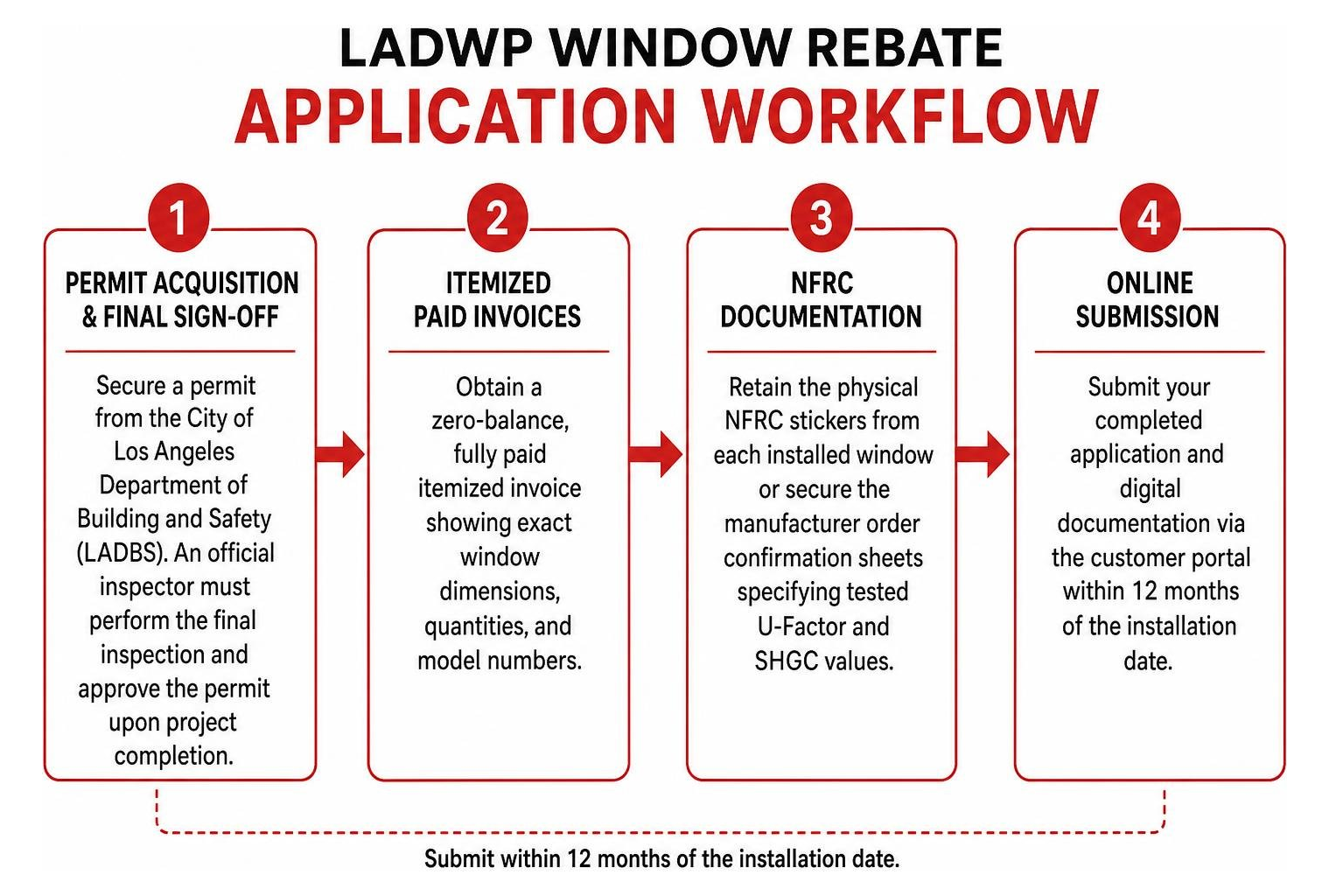
- Permit Acquisition & Final Sign-Off: Secure a permit from the City of Los Angeles Department of Building and Safety (LADBS). An official inspector must perform the final inspection and approve the permit upon project completion.
- Itemized Paid Invoices: Obtain a zero-balance, fully paid itemized invoice showing exact window dimensions, quantities, and model numbers.
- NFRC Documentation: Retain the physical NFRC stickers from each installed window or secure the manufacturer order confirmation sheets specifying tested U-Factor and SHGC values.
- Online Submission: Submit your completed application and digital documentation via the LADWP customer portal within 12 months of the installation date.
Because unpermitted or improper installations lead to rebate denials, working with licensed contractors who understand the importance of professional window installation ensures all technical and structural guidelines are met without delay.
Federal, State, and County Financial Assistance Programs in 2026
Beyond municipal water and power rebates, property owners can explore regional financing and assistance programs. Whether managing inland heat or implementing coastal home efficiency strategies, understanding current incentive timelines protects your budget.
Navigating Federal Tax Credits, HEAR, and HOMES Programs
Federal and state program updates for 2026 include:
- Federal 25C Tax Credit: The federal 25C Energy Efficient Home Improvement Credit (which previously offered up to $600 for qualifying window retrofits) expired at the end of 2025 for most homeowners.
- Home Electrification and Appliance Rebates (HEAR): In California, HEAR point-of-sale rebate funds are reserved on a waitlist basis due to massive consumer demand. Furthermore, standalone windows and doors are not directly covered by HEAR point-of-sale incentives.
- HOMES Program (Whole-Home Energy Reduction): The federal HOMES program offers modeled energy-reduction rebates up to $8,000 for whole-home retrofits. Energy-efficient windows directly improve building modeling scores to help homeowners achieve the required 20% to 35% overall energy reduction.
- Area Median Income (AMI) Thresholds: Low-to-moderate-income incentives hinge on AMI metrics. In Los Angeles County, 80% of the AMI for a family of four is $133,250 (with 150% AMI at $249,800). Households below these limits receive priority funding.
- GoGreen Home Loans: California offers zero-fee, zero-closing-cost financing programs featuring competitive interest rates for residential efficiency retrofits.
Low-Income Assistance and Disaster Recovery Incentives
Targeted assistance programs provide additional relief:
- Energy Savings Assistance (ESA): Low-income residents can qualify for no-cost weatherization and efficiency upgrades managed through local utility providers.
- EZ-SAVE Program: LADWP offers discounted utility billing rates for income-qualified families to manage seasonal expenses.
- LA County Recovers: Homeowners rebuilding after recent wildfire emergencies can tap into dedicated disaster recovery guides. Participating regional building suppliers provide specialized discounts on fire-resilient, dual-pane fenestration packages for verified recovery zones.
- Disadvantaged Community Initiatives: Programs like the Clean Energy Green Tariff provide up to a 20% utility billing discount for communities facing disproportionate environmental impacts.
Homeowners in surrounding municipal areas can also review localized options such as Santa Monica replacement window options to verify local municipal building standards and city incentives.
Maximizing Home Energy Savings: Pairing Windows with Complementary Upgrades
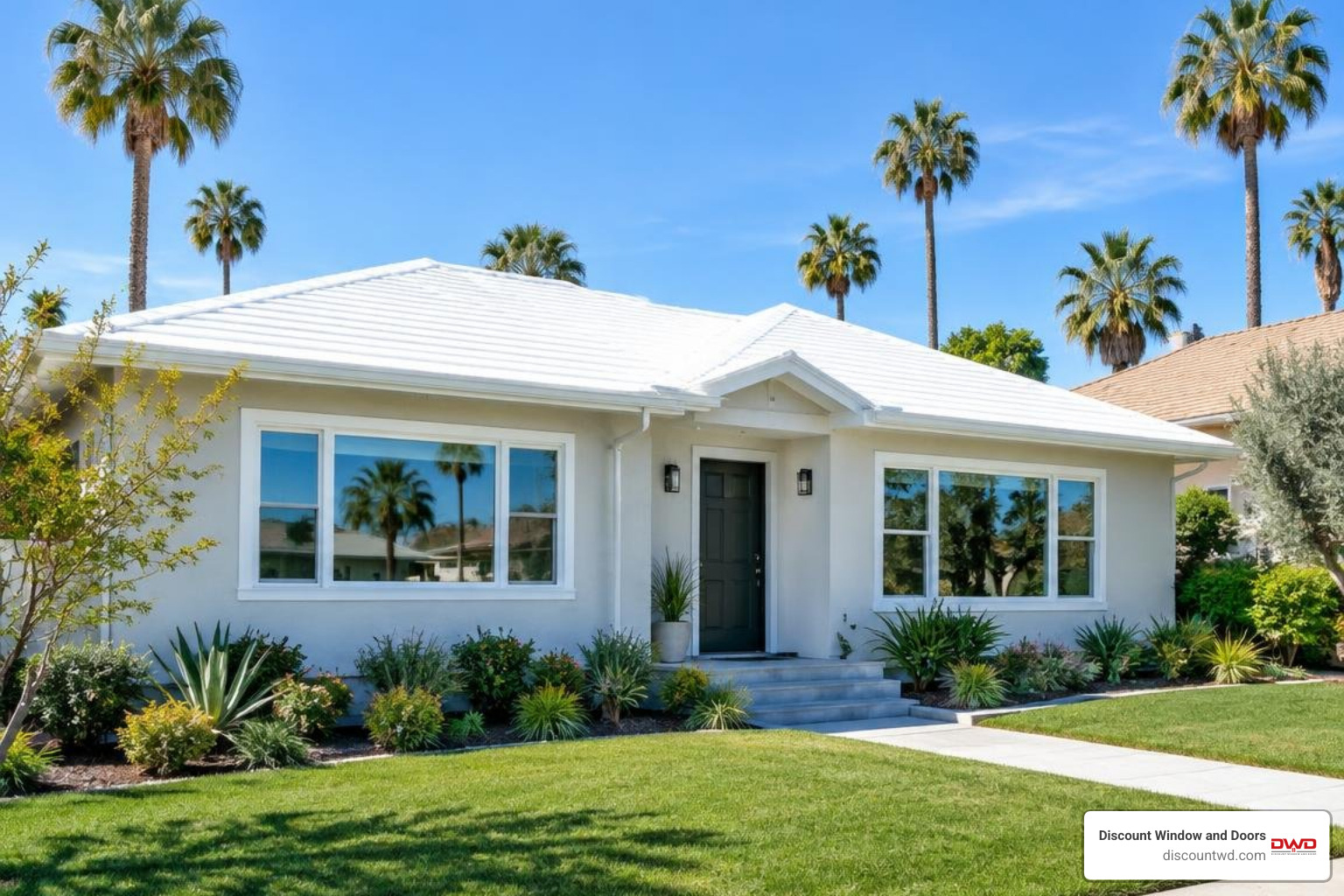
High-performance fenestration handles significant heat exchange, but pairing windows with other ways to insulate your home establishes an airtight thermal envelope.
High-Impact Retrofits: Cool Roofs, Attic Insulation, and Heat Pumps
Combining multiple utility incentives delivers comprehensive structural performance:
- Cool Roof Rebates: LADWP provides $0.20 to $0.60 per square foot for certified cool roofs with high Solar Reflectance Index (SRI ≥ 78 to ≥ 85) ratings. A cool roof reflects solar radiation away from your home, keeping interior temperatures up to 50°F cooler at the surface compared to standard roofing.
- Attic Insulation Rebates: Upgrading insulation prevents radiant attic heat from seeping into living spaces, reducing overall cooling strain.
- Heat Pump HVAC Rebates: High-efficiency heat pump systems qualify for rebates up to $2,500 per ton when installed as part of clean energy conversions.
- Variable-Speed Pool Pumps: Upgrading pool equipment to variable-speed motors nets direct utility rebates while eliminating high baseline electrical draw.
Whole-Home Efficiency Strategy with Energy Efficient Windows in Los Angeles
When high-efficiency windows, reflective roofing, and proper insulation work together, the home’s overall cooling load drops considerably. This allows homeowners to downsize HVAC tonnage when replacing aging air conditioning units.
Beyond lowering monthly bills, this balanced approach achieves superior Home Energy Rating System (HERS) scores and provides lasting indoor temperature stability while significantly boosting overall resale value.
Frequently Asked Questions About Energy Efficient Windows in Los Angeles
How much does the LADWP rebate pay for energy-efficient windows?
LADWP pays $2.00 per square foot of installed window area for qualifying residential retrofits. Understanding how lowering monthly utility bills with efficient windows compounds these savings shows the real value. For example, replacing 250 square feet of old single-pane glazing with qualifying units yields a $500 direct cash rebate alongside immediate reductions on your bimonthly electric bill.
What technical ratings are required to qualify for window rebates in LA?
To qualify for the LADWP Consumer Rebate Program, windows must carry ENERGY STAR certification with an NFRC-verified U-Factor of 0.30 or lower and a Solar Heat Gain Coefficient (SHGC) of 0.25 or lower. These specifications must be visible on the original NFRC stickers or documented within the manufacturer’s order confirmation sheets.
Can I combine LADWP window rebates with other California energy incentives?
Yes. LADWP utility rebates can be stacked with state energy initiatives (such as TECH Clean California or whole-home HOMES funding) and utility insulation credits. However, the cumulative rebate amount across all programs cannot exceed 100% of the total out-of-pocket project cost. Retain all signed building permits, itemized receipts, and proof of payment to satisfy compliance reviews.
Conclusion
Upgrading to high-efficiency windows improves comfort, protects your interiors from UV damage, and lowers monthly cooling bills. Taking advantage of the LADWP $2.00/sq. ft. rebate helps offset project costs while enhancing home value.
At Discount Window and Door, we provide wholesale pricing through our sister distributor network alongside personalized guidance in our Anaheim and Redondo Beach showrooms. From product selection and Title 24 compliance verification to precision measurement and professional installation, our team ensures your upgrade runs smoothly from start to finish.
Ready to start saving? Start your home window upgrade project today by requesting a custom quote or visiting our local showrooms to explore our full line of energy-efficient windows and doors.


